Why Spray Foam Rodent Exclusion Fails — Anna, TX
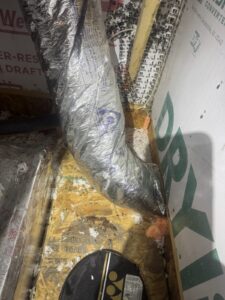
At the time of the inspection, identified roof rat activity in the attic. The homeowner had a roofline area where rodents were getting into…
Proudly Serving Anna and Surrounding Communities
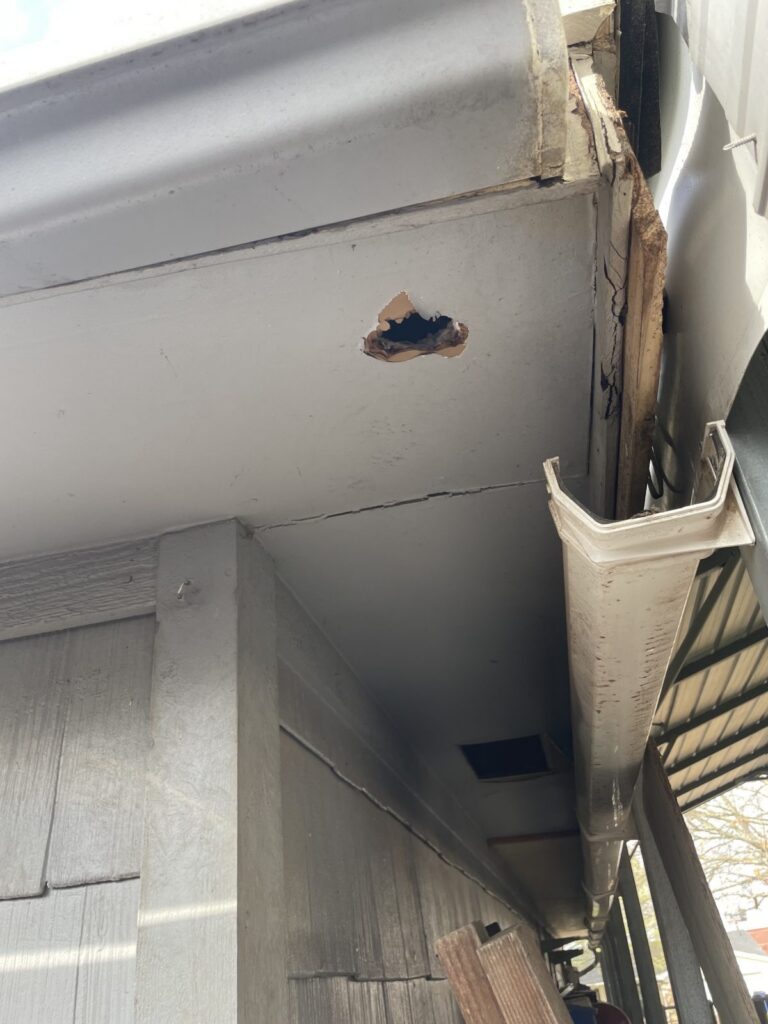
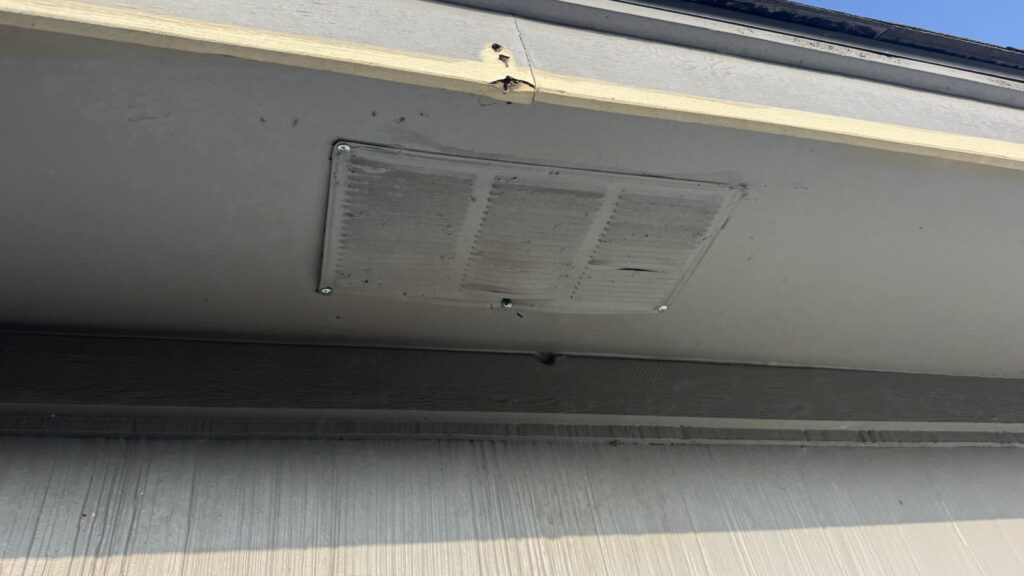
Customer called in and had rodents chewing through the soffits. Some of the soffits were completely destroyed.
Holes in the soffits form rodents chewing through
We ended up installing new soffit vent covers over the damaged areas and then installed a one way door that allows rodents to exit but not re-enter.
A one-way door exists for a situation like this one. The soffit here did not have a gap. It had a hole, chewed clean through the panel, with more damage further along the run.
That distinction matters. A gap is a construction tolerance that widened over time. A hole is an animal deciding it wants in and working at the material until it gets there.
Rodent incisors grow continuously, so gnawing is not damage to them. It is maintenance. Soffit panels are soft, thin, and sit exactly where a climbing animal arrives, which makes them an easy target. Texas A&M AgriLife Extension has more on how rodents establish in attics.
Sealing is the right answer before anything moves in. Once something has, sealing on its own becomes the wrong move, and it is the most common mistake homeowners make.
Close every opening on an occupied attic and you have not solved anything. You have locked the animal inside with the insulation and the wiring. It will die up there, or it will chew a new way out, and both outcomes cost more than the original problem.
So the sequence matters more than the materials. Everything living in the attic has to leave before the last opening closes.
A one-way door solves that sequencing problem. It mounts over the active opening and works in a single direction. An animal inside can push through it and get out. Once outside, it cannot get back in.
Nothing has to be caught, handled or removed. The rodents leave on their own schedule, because they leave every night anyway to feed. They simply find the route closed behind them.
In addition, it avoids the part of trapping people dislike most. There is no animal to deal with, and nothing dies in a wall cavity.
Once the one-way door had done its work, we fitted new soffit vent covers over the chewed areas. Those serve two purposes at once.
First, the attic still needs to breathe. A soffit vent is not decorative, and blocking it outright trades a rodent problem for a moisture one. Second, a metal cover gives the damaged panel a surface that will not be chewed again, because the original material already proved it could be.
Patching a chewed hole with the same soft panel invites a repeat. The animal already knows the spot.
Knowing when to fit a one-way door starts with noticing the problem. Attic rodents announce themselves in fairly predictable ways. Noise is the usual first sign, and the timing tells you a lot. Scratching or scurrying at dusk and again before dawn fits rodent activity, because that is when they leave to feed and return.
Look for droppings in the garage, along wall bases, or in the back of cupboards. Grease marks build up where an animal uses the same route repeatedly. Outside, check the soffit line for holes rather than gaps, and look for a way up: a downpipe, a fence meeting the eaves, or a limb over the roof.
One thing worth knowing about timing. Attic activity does not stop when winter ends. Spring brings nesting, so a problem ignored in January is usually a larger one by March.
This job was reactive. The damage existed and the rodents were inside, so the work had to run in order. The one-way door went on first, and the repairs followed once the attic had emptied.
A house with gaps rather than holes is a much simpler job. Sealing a roofline before anything moves in takes one pass and no waiting.
The difference between the two is usually a season. If you can hear movement overhead, or you have found a hole rather than a gap, it is worth having looked at now rather than after the damage spreads along the run.
Real jobs from our own records — what the inspection found, and why we treated it the way we did.
At the time of the inspection, identified roof rat activity in the attic. The homeowner had a roofline area where rodents were getting into…
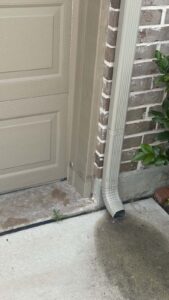
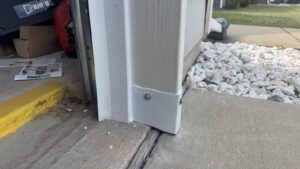
There was a large gap at the corner of the garage door that rodents were entering the garage through.
Upon the inspection, it was determined that the concrete was slightly sloped in addition to the gap at the garage door corner that was…

More on this: Rodent Control in Van Alstyne