

Getting Rodents Out With a One-Way Door — Van Alstyne, TX
Holes in the soffits form rodents chewing through
Proudly Serving Anna and Surrounding Communities
Termite damage found during a renovation with no live insects present is still a soil problem, which is why the treatment goes to the entry point and the perimeter rather than the damaged wood.
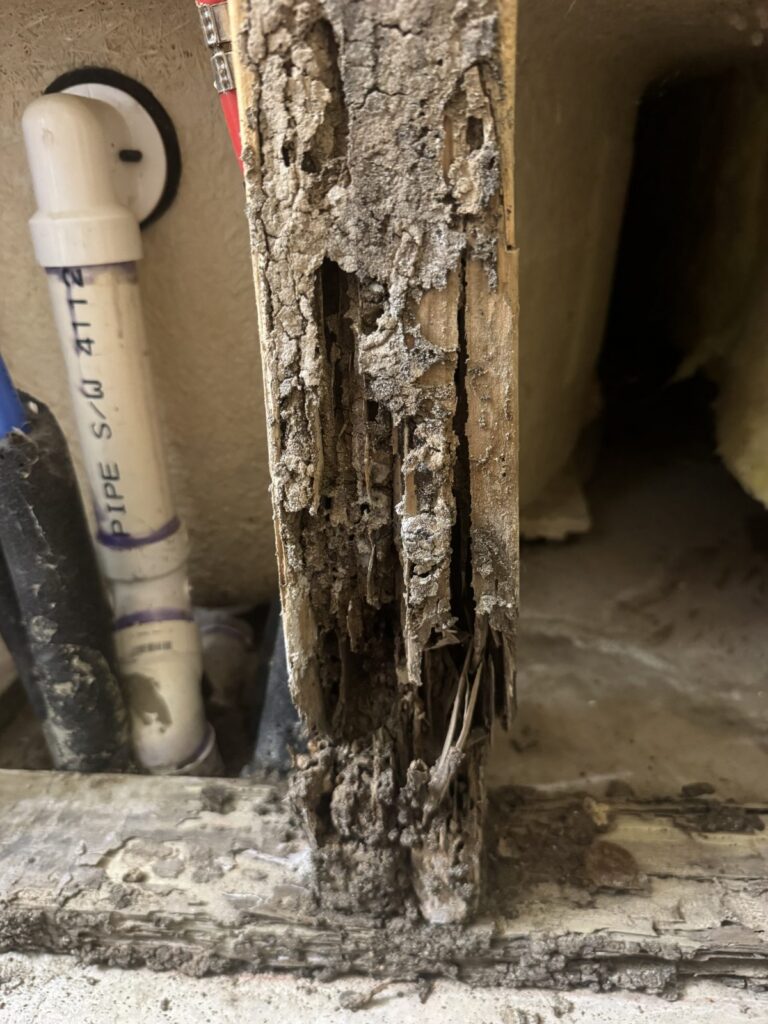
The homeowner is renovating their bathroom and during the renovation termite damage was exposed. Contact the office for an inspection.
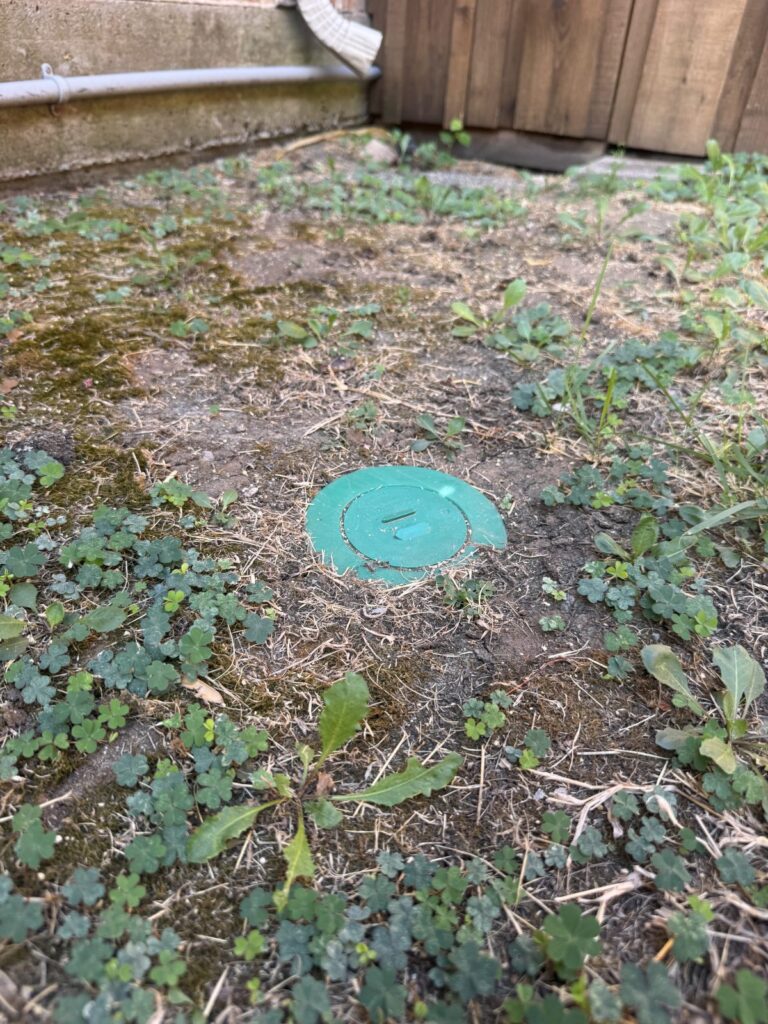
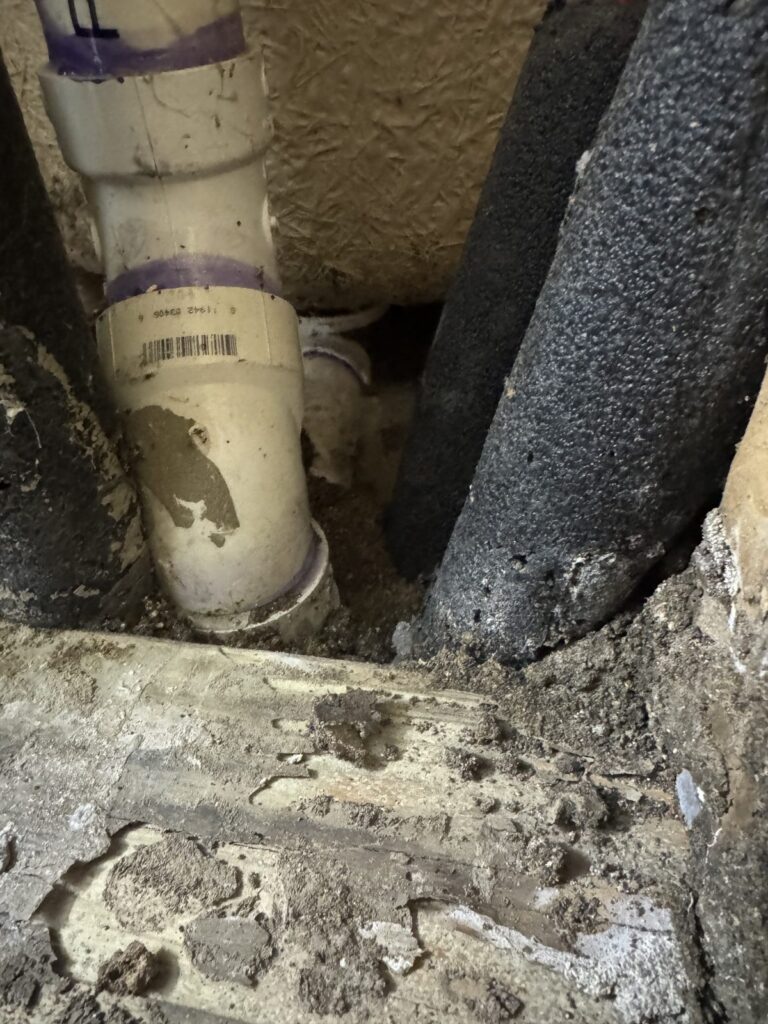
During the inspection, uncovered, pretty severe termite damage, but no active termites. Recommend recommended treating plumbing access along with Sentricon on the exterior of the home. Recommended having a contractor remove the framing and replace with treated lumber.
With no active termites present, the best course of action was to treat the area where the termites were coming up from the soil, and then install the Sentricon system on the exterior to eliminate any other termites before getting into the home
Most termite damage turns up the way this did. Not by finding insects, but by opening something up. A bathroom renovation, a vanity pulled out, a baseboard off the wall, and there it sits in wood that looked sound while it was covered.
The instinct is to ask whether the termites are still there. It is the right question, and here the answer was no. The inspection found nothing active.
However, that does not mean nothing is there. An inspection only samples what a technician can reach, and a subterranean colony lives in soil that may sit many feet from the wall you opened. No live insects in one stud tells you about that stud.
So “no active termites” did not end the job.
On a slab house, subterranean termites have limited options. They live in soil and must keep contact with moisture. Therefore they reach framing in one of two ways: they build a visible mud tube up an exterior face, or they use a gap that already runs through the slab.
Plumbing penetrations give them the most common of those gaps. Every drain, supply line and vent passes through the concrete, and builders rarely seal the space around the pipe properly. Often nothing fills it but the sand the slab was poured over.
That leaves a covered, humid route from soil straight to framing, and it never surfaces anywhere a homeowner would look. Bathrooms and kitchens hold the plumbing, so they are where this termite damage usually appears. Texas A&M AgriLife Extension explains how subterranean termites reach a structure.
It also ties a slab home’s risk to how builders put it together. If you have wondered whether the treatment under your slab still does anything, that question has a specific answer.
Spraying damaged timber feels like the obvious move, and it achieves very little. The wood only shows the termite damage. The soil holds the animal.
Treating a stud handles whatever sits in that stud at that moment. It does nothing about the route, the colony, or the next stud along.
So the work went to the two places that matter. We treated the point where termites were coming up from the soil, because that is a known breach. In addition, stations went around the exterior, because foraging termites move through the ground and we can intercept them there.
We did not replace the damaged framing, and that is scope rather than modesty. A Texas pest control license covers termite treatment. Structural carpentry sits under different licensing entirely.
That part went to Rainy Day Restoration, and we recommended treated lumber for the replacement. Repairing termite damage with untreated timber simply puts fresh food back in the same spot.
A renovation gives you the cheapest termite inspection you will ever get, because the wall already stands open. Check the base of the studs where they meet the plate. Then check whatever timber sits nearest a pipe coming through the slab.
Mud packed into the grain, wood that sounds hollow, and a dry grey crust all matter. Dealing with termite damage while the wall stands open costs far less than finding it later. If something looks wrong, ask someone to look before you close it up.
Real jobs from our own records — what the inspection found, and why we treated it the way we did.
Holes in the soffits form rodents chewing through
Part of this job was outside what we do, and went to We recommended Rainy Day Restoration to replace the framework in the bathroom.
More on this: Termite Control in Van Alstyne