

You have tried the lemon juice. You have wiped down the counters with vinegar. You have followed the trail back to its entry point and sprayed it. And the ants are still here. Most Anna homeowners who struggle with persistent ant problems are not failing because they are not trying. They are failing because much of the conventional wisdom about ants control simply does not match how ants actually function. Replacing those myths with accurate information is the first step toward a strategy that actually works.
Myth: Killing the Ants You See Solves the Problem
This is the most common ants control mistake in Anna homes, and it persists because killing visible ants produces an immediately visible result. You spray the trail, the ants die, and the problem appears to be solved. For about a day.
The reason this approach fails is straightforward. The ants you see foraging on your counter represent a tiny fraction of the colony. Estimates vary by species, but the foraging ants visible on the surface typically represent less than 10 percent of the total colony population. The remaining 90-plus percent, including the queen and the brood, are inside a colony located outside the home, in the soil beneath the foundation, in a wall cavity, or in a landscape feature near the structure.
Killing the visible ants does nothing to the colony. The colony simply sends more foragers, often through slightly different pathways, and the problem appears to recur the next day. In some cases, killing visible ants with repellent products actually makes the situation worse, since certain ant species respond to repellent contact by scattering and establishing satellite colonies elsewhere on the property.
The solution that actually works targets the colony itself. Professional ant control uses bait products specifically formulated to be carried back to the colony by foraging ants, where they reach the queen and eliminate the source of the foragers rather than just the foragers themselves. This is why professional treatment produces lasting results where surface sprays produce only temporary disruption.
Myth: Natural Repellents Like Cinnamon, Lemon, or Vinegar Solve Ant Problems
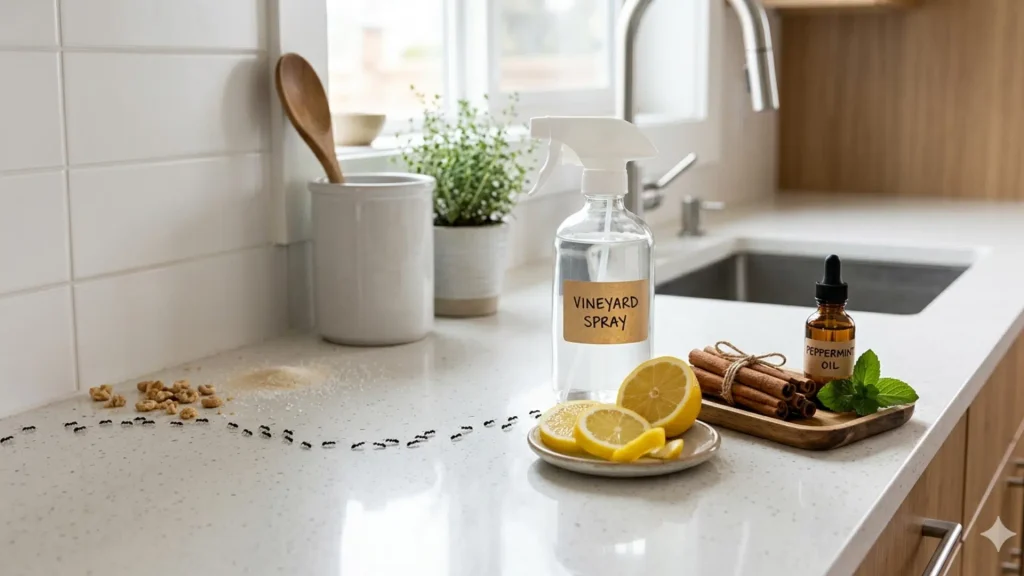
The internet is full of recommendations for natural ant deterrents. Cinnamon sprinkled along entry points. Lemon juice on counters. Vinegar in problem areas. Coffee grounds in the garden. These suggestions are repeated so frequently that they have taken on the appearance of established knowledge. The reality is that they produce limited and inconsistent results.
What these substances actually do is disrupt the chemical trail that ants use to communicate. Ants lay pheromone trails as they forage, allowing the colony to locate food sources efficiently. Strong-smelling natural substances can temporarily mask or interrupt those trails, causing foragers to lose their path. This effect is real but limited in several important ways:
- The effect is temporary, since the substances dissipate over hours or days and need to be reapplied constantly
- The colony is unaffected, meaning the source of the foragers remains intact and active
- Ants find alternate paths, since blocking one trail simply prompts the colony to send foragers in different directions
- The substances do not kill ants, meaning the population grows even as homeowners attempt to control it
- The home environment is affected, with strong odors, residues, and ongoing reapplication that creates more homeowner work than results
Natural repellents have a place in some pest management approaches, but they are not a solution for an established ant infestation. They are a delaying tactic that may produce short-term reductions in visible activity while the underlying colony continues to grow.
Myth: A Clean House Will Not Have Ant Problems
Cleanliness matters for many reasons, but it is not a reliable defense against ant infestations in Anna homes. Property owners who follow this myth often feel that an ant problem reflects on their housekeeping, when in reality the relationship between cleanliness and ants is more complicated than the popular narrative suggests.
Several ant species in North Texas seek water rather than food, particularly during dry weather. These ants enter homes regardless of food availability, drawn by moisture in bathrooms, kitchens, laundry rooms, and around HVAC condensate locations. A spotless home with a sink dripping or a bathroom with high humidity is just as attractive to these species as a home with visible food residues.
Other ant species are attracted to specific food sources that even careful homes cannot eliminate entirely. Pet food in bowls, recycling containers, fruit ripening on counters, and small crumbs that accumulate in normal household use are all sufficient to attract foraging ants. The threshold for what attracts ants is far lower than the threshold for what would be considered a cleanliness issue.
Anna’s climate also plays a role. The combination of warm temperatures, humidity, and the disruption of natural habitats by ongoing development pushes ant colonies toward residential properties regardless of how well the homes are maintained. Fire ants, in particular, are responding to environmental conditions, not housekeeping standards.
A clean home reduces some risks. It does not eliminate them, and it does not substitute for proper ants control.
Myth: All Ants Respond to the Same Treatment
This misconception leads to a lot of wasted effort and continued frustration. Anna homeowners frequently apply a treatment that worked on one type of ant to a different type of ant and assume the lack of results means the treatment is defective. The actual issue is that different ant species require different approaches.
North Texas hosts several ant species that look similar at a glance but respond to treatment differently:
- Fire ants build outdoor mounds and respond to broadcast granular treatments designed for soil-dwelling colonies. They require different products than household indoor ants.
- Sugar ants and odorous house ants forage for sweet food sources and respond to specific bait formulations designed for protein-deficient diets.
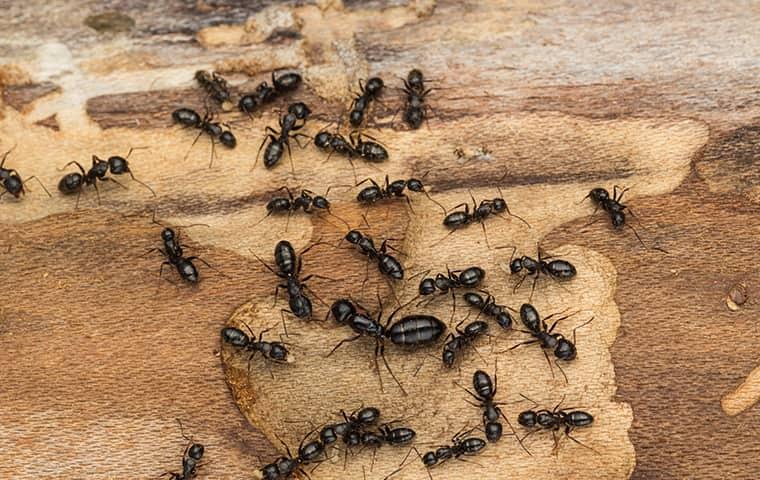
- Carpenter ants target wood and cellulose materials, often nesting in walls or wood structures. They require both bait treatment and source location to eliminate.
- Crazy ants form supercolonies that resist standard treatments and require professional protocols.
- Pavement ants nest in cracks in concrete and respond to perimeter treatments around foundations.
A homeowner applying fire ant granules to an indoor sugar ant problem will see no results. A homeowner applying sugar ant bait to a carpenter ant situation will see limited effect on the actual nesting population. Effective ants control begins with accurate species identification, which is one of the reasons professional pest control service typically produces better results than generic DIY approaches.
Myth: Ant Problems Resolve On Their Own When the Weather Changes
Some homeowners assume that ant problems are seasonal and will resolve when temperatures change. This belief leads to delayed action that allows colonies to establish more deeply before any treatment is attempted.
Ant activity does shift seasonally in Anna. Foraging activity is more visible in warmer months and may appear to decrease in winter. But the colony itself does not disappear. It moves deeper into protected harborage, including inside structures, where it continues to grow and develop. A property that experiences visible ant activity in summer often has the same colony actively nesting through winter, simply less visible from the surface.
Spring then produces an apparent resurgence that homeowners interpret as a new infestation. In reality, the same colony has continued growing through the winter and is now sending foragers again as temperatures rise. By spring, the colony is typically larger and more entrenched than it was the previous summer.
The practical implication is that ant problems do not resolve through inaction. They progress. A treatment plan in fall or winter, when colonies are less visible but still present, is often more effective than treatment in peak summer when foraging activity is at its maximum and reactive responses dominate the household’s energy.
Replacing These Myths Produces Better Ants Control Results
The Anna homeowners who manage ant problems most effectively are the ones who let go of the misconceptions that produce limited results and adopt approaches matched to how ants actually function. Effective ants control targets the colony rather than the foragers, uses products formulated for the specific species involved, accounts for the moisture and environmental factors that draw ants to properties regardless of cleanliness, and operates on a continuous schedule rather than reactive responses to visible activity. Property owners who shift to this approach consistently see ant pressure decline in ways that DIY surface treatments rarely achieve.
Stop Fighting Ants With Methods That Do Not Work
The team at EcoArmor Pest Defense is ready to help. Contact us today to schedule professional ants control at your Anna, TX property and replace the myths that have produced frustration with treatment that actually addresses the colony at its source.