
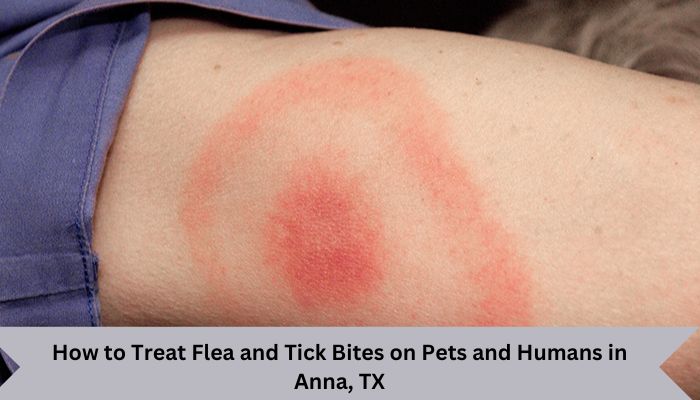
Flea and tick bites are more than just an annoyance—they can cause discomfort, irritation, and even serious health problems for both pets and humans. In Anna, TX, the warm and humid climate provides an ideal breeding ground for these pests, making it essential to understand how to treat bites effectively and protect your loved ones.
Recognizing Flea and Tick Bites
Fleas and ticks both leave behind noticeable symptoms that can alert you to their presence:
- Flea Bites on Humans: Small, red, itchy bumps typically clustered around the ankles, feet, or other exposed areas.
- Tick Bites on Humans: A single, red, raised spot that may include a visible tick still attached. The bite may cause minor swelling or redness around the site.
- Flea Bites on Pets: Excessive scratching, biting, or licking of the skin. Red, inflamed areas may develop, particularly around the neck, belly, or tail base.
- Tick Bites on Pets: Swelling or irritation at the attachment site. If a tick is still attached, it will appear as a small, dark bump on the skin.
Removing the Flea or Tick
Proper removal is critical for preventing further irritation or infection.
Removing Fleas
Fleas are fast and can be tricky to catch. For both humans and pets:
- Bathing: Use a flea shampoo or mild soap to bathe pets. For humans, a warm shower with soap can help wash away fleas.
- Comb: Use a flea comb to thoroughly comb through fur, focusing on areas where fleas tend to hide, such as behind the ears and under the legs.
Removing Ticks
Ticks must be removed carefully to prevent leaving the head embedded in the skin.
- Use Tweezers: Grip the tick as close to the skin as possible. Avoid squeezing its body.
- Pull Gently: Apply steady, even pressure until the tick releases. Do not twist or jerk, as this may cause the head to break off.
- Clean the Area: After removal, clean the bite site with soap and water, followed by an antiseptic.
Treating the Bite
Once the flea or tick is removed, focus on treating the bite to reduce itching, swelling, and the risk of infection.
Treating Flea Bites
For Humans:
- Apply an anti-itch cream or calamine lotion to soothe irritation.
- Take an oral antihistamine to reduce itching and swelling.
- Avoid scratching the bites, as this can lead to infection.
For Pets:
- Use a pet-safe hydrocortisone cream to relieve itching.
- Apply a cold compress to inflamed areas for short-term relief.
- Monitor the area for signs of infection, such as oozing or increased redness.
Treating Tick Bites
For Humans:
- Wash the area thoroughly with soap and water.
- Apply an antiseptic or antibiotic ointment to the bite site.
- Monitor for signs of Lyme disease or other tick-borne illnesses, such as a bullseye rash, fever, or fatigue.
For Pets:
- Clean the bite area with pet-safe antiseptic.
- Apply a topical ointment to reduce inflammation.
- Watch for signs of illness, such as lethargy, loss of appetite, or fever, and consult a veterinarian if symptoms occur.
Preventing Future Bites
The best treatment is prevention. Fleas and ticks thrive in warm climates like Anna, TX, so proactive measures are crucial.
For Pets:
- Use Preventative Treatments:
- Invest in flea and tick collars, topical treatments, or oral medications.
- Maintain Grooming:
- Regularly bathe and groom your pets to keep pests at bay.
- Inspect Regularly:
- After outdoor activities, check pets for ticks, particularly in hidden areas like under the collar or between the toes.
For Humans:
- Wear Protective Clothing:
- Long sleeves, pants, and closed-toe shoes can help minimize exposure during outdoor activities.
- Use Insect Repellent:
- Apply a DEET-based repellent to exposed skin when spending time in tick-prone areas.
- Conduct Daily Checks:
- Check your body for ticks after being outdoors, paying attention to hidden areas like behind the ears and knees.
For Your Home:
- Clean Regularly:
- Vacuum carpets, rugs, and furniture to remove flea eggs and larvae.
- Lawn Maintenance:
- Keep your yard trimmed and free of debris, as ticks often hide in tall grass and leaf piles.
- Professional Pest Control:
- Consider hiring a pest control service in Anna, TX, to treat your home and yard for fleas and ticks.
When to Seek Professional Help
If flea or tick bites lead to severe reactions, infections, or symptoms of illness, seek medical or veterinary attention promptly.
- For Humans: If you experience difficulty breathing, swelling beyond the bite site, or signs of a tick-borne illness, consult a healthcare professional immediately.
- For Pets: Visit a veterinarian if your pet exhibits unusual behavior, persistent itching, or symptoms like fever or lethargy.
Conclusion
Flea and tick bites are a common issue in Anna, TX, but with proper care and preventative measures, you can minimize their impact on your family and pets. Regular grooming, home maintenance, and timely treatment of bites ensure your loved ones stay healthy and comfortable. Stay vigilant, and enjoy a pest-free environment in your home and yard!